The Quiet Intelligence Behind a Spoken Command
Voice assistants have become so familiar that many people barely think about what happens after they say a simple command. A person asks for the weather, sets a reminder, searches for a song, or turns off the lights, and the answer comes back almost instantly. It feels casual, almost effortless. But behind that short exchange is a surprisingly complex chain of language processing, prediction, and decision-making.
Natural language processing in voice assistants is what allows these systems to move beyond hearing sounds and start understanding meaning. Without it, a voice assistant would only receive noise, words, or fragments of speech. With it, the assistant can identify what the user wants, connect the request to the right action, and respond in a way that feels natural enough to continue the conversation.
This does not mean voice assistants truly understand language the way humans do. They do not share our memories, emotions, or lived experiences. Still, they are designed to interpret patterns in speech and text well enough to make everyday interactions feel smooth.
From Spoken Sound to Digital Text
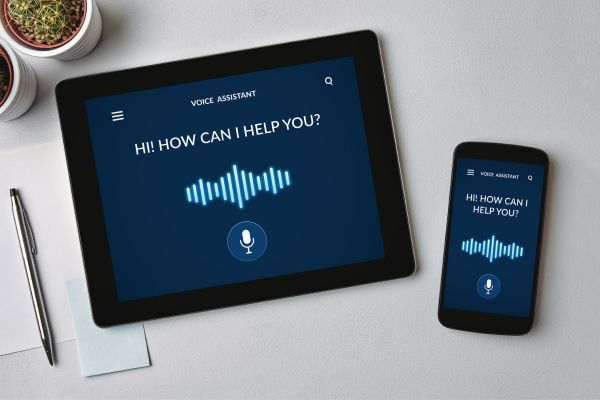
The first step in a voice assistant’s work begins before natural language processing fully takes over. When someone speaks, the device captures sound waves through a microphone. These sound waves are then converted into digital signals that a computer can process.
This stage is often called speech recognition or automatic speech recognition. The system tries to identify which words were spoken by comparing the audio signal with patterns it has learned from large amounts of speech data. It must deal with accents, background noise, speed, pronunciation differences, and casual speaking habits.
People rarely speak in perfect textbook sentences. They pause, restart, mumble, stretch words, and use filler sounds. Someone might say, “Uh, remind me tomorrow morning to call Sara,” and the assistant still has to extract the useful part of the message. Once the spoken words are converted into text, natural language processing begins the deeper task of understanding what those words mean.
Understanding Intent in Everyday Speech
One of the most important jobs of NLP in voice assistants is intent recognition. Intent is the purpose behind a request. When a user says, “Play some relaxing music,” the intent is not just about the words “play” and “music.” The assistant must understand that the user wants audio playback, probably from a music service, with a calm mood or genre.
Intent recognition helps voice assistants sort requests into categories. A question about the weather belongs to one type of task. A request to send a message belongs to another. Asking for directions, setting a timer, checking a calendar, or controlling a smart home device all require different actions.
This is harder than it sounds because people can express the same intent in many ways. “Wake me up at seven,” “Set an alarm for 7 a.m.,” and “Make sure I’m up by seven tomorrow” all point toward the same basic task. Natural language processing helps connect these different phrases to the same meaning.
Finding the Important Details
After recognizing intent, the assistant needs to find the details that make the request complete. In language processing, these details are often called entities. They may include dates, times, names, places, products, songs, contacts, or numbers.
For example, in the sentence “Remind me to pay the electricity bill on Friday evening,” the assistant must identify the action, the reminder text, and the time. In “Call Ahmed after work,” it needs to find the contact name and understand what “after work” might mean based on context, settings, or a follow-up question.
This part of natural language processing in voice assistants is essential because a small misunderstanding can change the result completely. “Set a timer for fifteen minutes” is very different from “set a timer for fifty minutes.” “Text Mom I’ll be late” must not become “Text Tom.” The system has to be careful, especially when the action affects communication, money, travel, or home devices.
Context Makes Conversation Feel Natural
Early voice systems often felt stiff because they treated every command as a separate event. Modern voice assistants try to use context to create a more natural flow. If someone asks, “Who directed this movie?” and then follows with “What else did he make?” the assistant needs to understand that “he” refers to the director mentioned in the previous answer.
Context can include the earlier conversation, the user’s location, device settings, time of day, app preferences, and sometimes personal patterns. This allows the assistant to respond more intelligently. A request like “Take me home” only makes sense if the system knows what “home” means for that user. “Play my usual playlist” depends on listening history or saved preferences.
Still, context is a delicate area. The more a system uses personal information, the more carefully it must handle privacy and consent. Helpful personalization should not feel intrusive. A good voice assistant balances convenience with respect for the user’s boundaries.
Why Human Language Is So Difficult
Human language is messy, flexible, and full of hidden meaning. People use slang, regional expressions, incomplete sentences, humor, indirect requests, and emotional tone. A voice assistant may understand “Turn on the living room lights,” but struggle with “It’s kind of dark in here,” even though a person might understand the implied request.
Ambiguity is one of the biggest challenges. If someone says, “Book a table near the office,” the assistant needs to know which office, what time, how many people, and what type of restaurant. If someone asks, “Is it cold outside?” the answer depends on location, weather data, and sometimes personal expectation. Cold in one city may feel normal in another.
Natural language processing tries to reduce this uncertainty by using probability, patterns, and context. Instead of searching for one fixed meaning, the system estimates the most likely meaning based on the available information. When confidence is low, the assistant may ask a follow-up question. That small moment of clarification is often better than confidently doing the wrong thing.
Generating a Helpful Response
Understanding the request is only half the process. The assistant also needs to reply in language that feels clear and useful. Natural language generation is the part of NLP that helps turn data or actions into a human-readable response.
If the user asks for the weather, the system may collect temperature, rain probability, and forecast details, then turn them into a spoken answer like, “It’s currently cloudy and 18 degrees, with rain expected later this evening.” If the user sets a reminder, the assistant may confirm it briefly. If it cannot complete a task, it should explain the problem in a way that does not feel confusing.
Tone matters here. A response that is too long can become annoying. A response that is too short may feel unclear. Voice assistants work best when they speak in a direct, conversational way, giving enough information without overwhelming the user.
Learning From Repeated Interactions
Machine learning plays a major role in improving voice assistants over time. These systems are trained on large datasets of speech, text, commands, and user interactions. The more examples they process, the better they become at recognizing different accents, sentence structures, and request patterns.
However, learning from interactions does not mean every device is constantly and freely studying every private conversation. Responsible systems need privacy controls, data protection, and clear limits on what is collected and how it is used. The technical ability to learn from data should always be matched with ethical care.
Improvements often appear in small ways. The assistant may become better at understanding names, recognizing local phrases, handling noisy rooms, or responding to more natural follow-up questions. These small changes make the experience feel less mechanical.
The Limits of Voice Assistant Understanding
Even with strong NLP, voice assistants still have limits. They may misunderstand unusual phrasing, struggle with heavy background noise, or give shallow answers to complex questions. They can also miss emotional meaning. A human can hear frustration, sarcasm, or worry in a voice. A machine may detect some signals, but it does not truly feel or understand them.
There is also the issue of trust. Users may assume that because an assistant sounds confident, it must be correct. But voice assistants can still make mistakes. They can mishear words, pull incomplete information, or misunderstand context. For this reason, voice technology should be treated as useful support, not perfect judgment.
Conclusion
Natural language processing in voice assistants is what turns spoken commands into meaningful action. It helps these systems recognize words, understand intent, identify important details, use context, and respond in a way that feels conversational. The process may seem simple from the outside, but every quick answer depends on several layers of language technology working together.
As voice assistants continue to improve, they will likely become better at handling natural speech, follow-up questions, accents, and everyday ambiguity. Still, their success depends on more than technical accuracy. They must also respect privacy, avoid overconfidence, and support human needs without pretending to be human.
At their best, voice assistants show how powerful language technology can be when it quietly fits into daily life. They listen, interpret, respond, and help with small tasks that would otherwise take extra time. The real achievement is not just that machines can hear us, but that they are slowly getting better at understanding what we mean.