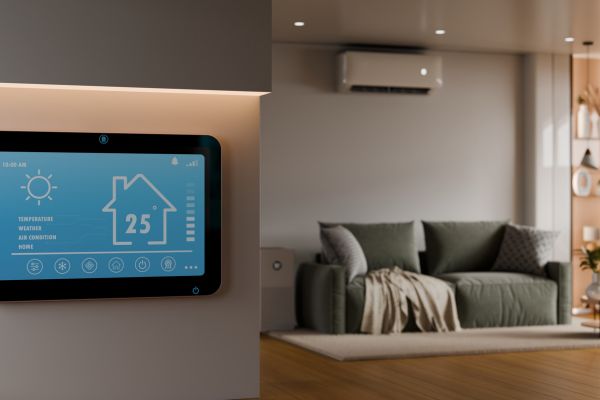
The modern home has become increasingly intelligent, though not always in obvious ways. Technology now quietly manages lighting, security, appliances, and even the temperature inside living spaces without demanding much attention from the people using it. Among these innovations, smart thermostats have emerged as one of the most practical tools for reducing household energy consumption while improving comfort at the same time.
For decades, thermostats remained relatively simple devices. Most people adjusted temperatures manually, often forgetting to lower heating or cooling settings when leaving home. Air conditioning systems ran in empty rooms, heaters stayed active overnight, and energy waste became part of normal daily life. Few people thought deeply about it unless utility bills suddenly increased.
That pattern has started to change. Smart thermostats for energy saving are becoming central to how modern households manage comfort and efficiency. What makes them interesting is not just the technology itself, but how naturally they fit into everyday routines. They do not require dramatic lifestyle changes or strict energy discipline. Instead, they work quietly in the background, adapting to habits and reducing waste almost invisibly.
The rise of these devices reflects a broader shift toward smarter living spaces where convenience and sustainability increasingly overlap rather than compete.
How Traditional Thermostats Wasted Energy
Older thermostat systems operated on a fairly rigid model. Homeowners manually selected a desired temperature, and the heating or cooling system worked continuously to maintain it. The system did not know whether anyone was home, whether outside temperatures had changed significantly, or whether certain rooms were even being used.
As a result, many households consumed far more energy than necessary.
A common example is daytime heating or cooling while everyone is away at work or school. Another is nighttime temperature management, where systems continue operating aggressively even after people are asleep and naturally less sensitive to slight temperature fluctuations.
Traditional thermostats also depended heavily on human consistency. Remembering to adjust settings multiple times each day is something many people simply forget. Over time, those small inefficiencies add up significantly.
Smart thermostats emerged as a response to this problem, offering automation and adaptive learning that manual systems could never provide.
The Evolution of Smart Climate Control
The earliest smart thermostats focused mainly on programmable schedules. Users could create customized heating and cooling routines based on daily habits. While useful, these systems still relied heavily on manual input.
Modern devices are much more advanced.
Today’s smart thermostats can analyze occupancy patterns, detect when people enter or leave the home, monitor weather forecasts, and automatically adjust climate settings in real time. Some systems even learn from behavior over several weeks, gradually building schedules without requiring constant user programming.
This shift from manual control to adaptive automation is what makes the technology especially effective for energy reduction.
Instead of forcing homeowners to think constantly about efficiency, smart systems quietly optimize energy usage behind the scenes. The process feels less like managing technology and more like living in a home that naturally responds to its environment.
Learning Habits and Predicting Routines
One of the more fascinating aspects of smart thermostats is their ability to recognize patterns. Over time, many systems begin understanding when occupants typically wake up, leave for work, return home, or go to sleep.
The thermostat can then adjust temperatures proactively.
For example, instead of running air conditioning heavily throughout the entire afternoon, the system may allow indoor temperatures to rise slightly while the home is empty. Shortly before occupants return, cooling resumes gradually so the environment feels comfortable upon arrival.
The same concept applies during colder months. Heating systems can reduce output overnight or during inactive periods without creating noticeable discomfort.
This type of predictive adjustment makes energy savings feel almost effortless. Homeowners are not constantly making sacrifices or monitoring temperatures obsessively. The system handles most of the optimization independently.
Interestingly, this automation often improves comfort rather than reducing it. Homes feel more balanced because temperature management becomes more responsive and less rigid.
Remote Access and Real-Time Control
Another major development is the ability to manage home climate systems remotely.
Through mobile applications, homeowners can adjust temperatures from virtually anywhere. If someone leaves home unexpectedly, they can reduce heating or cooling immediately rather than wasting energy all day. If plans change and people return home earlier than expected, the climate system can be activated remotely before arrival.
This flexibility has become especially useful for people with unpredictable schedules.
Remote access also increases awareness around household energy consumption. Many smart thermostat apps display detailed usage reports showing how much heating or cooling occurred each day, how weather conditions affected energy demand, and where efficiency improvements may be possible.
This visibility changes behavior subtly. When people can clearly see how energy is being consumed, they tend to make more thoughtful decisions without feeling pressured into extreme conservation habits.
Integration With Smart Home Ecosystems
Smart thermostats rarely operate in isolation anymore. They are increasingly connected to broader smart home systems that include lighting, security, voice assistants, and occupancy sensors.
For example, motion sensors may detect that no one is present in certain areas of the home, prompting the thermostat to adjust airflow or temperature accordingly. Smart blinds may close automatically during hot afternoons to reduce cooling demands. Voice assistants allow users to adjust climate settings conversationally without needing to touch controls manually.
This interconnected approach creates a more responsive home environment overall.
The interesting part is how naturally these systems blend into daily life. Once integrated, the technology often becomes nearly invisible. People stop thinking about “using” smart devices and simply experience a home that operates more intuitively.
Energy efficiency, in this sense, becomes less about conscious restriction and more about intelligent coordination.
Seasonal Efficiency and Weather Adaptation
Weather conditions play a huge role in household energy use, and modern thermostats are becoming increasingly skilled at adapting to environmental changes.
Some systems connect directly to weather forecasting services, adjusting heating and cooling strategies based on outdoor temperatures, humidity levels, and upcoming climate shifts. During mild weather, the thermostat may reduce system activity automatically. During extreme heat or cold, it can manage gradual adjustments more efficiently to avoid sudden energy spikes.
Humidity control has also become an important factor. In many climates, managing humidity effectively can make indoor temperatures feel more comfortable without excessively lowering or raising thermostat settings.
This combination of weather awareness and adaptive control allows smart thermostats for energy saving to operate far more efficiently than static manual systems ever could.
Environmental Benefits Beyond Lower Bills
Most people initially become interested in smart thermostats because of potential cost savings, but the environmental implications are equally important.
Residential heating and cooling account for a significant portion of household energy consumption worldwide. Reducing unnecessary energy usage lowers overall demand on power grids and decreases associated carbon emissions, particularly in regions still dependent on fossil fuel-based electricity generation.
The cumulative impact becomes substantial when millions of households adopt more efficient systems simultaneously.
Unlike some sustainability initiatives that require major lifestyle changes, smart thermostat technology works within existing daily routines. That practicality is part of why it has gained such widespread acceptance. People do not necessarily feel they are participating in environmental activism; they are simply living more efficiently.
Yet those small improvements collectively contribute to broader sustainability efforts.
Challenges and Limitations of Smart Thermostat Technology
Despite their advantages, smart thermostats are not perfect solutions.
Older homes with poor insulation or outdated HVAC systems may experience limited efficiency improvements even with advanced thermostat controls. Technology can optimize heating and cooling, but it cannot fully compensate for structural energy loss through windows, walls, or roofing.
Some users also find the learning curve frustrating initially. While many systems aim for simplicity, advanced settings and automation features can occasionally feel overwhelming for people unfamiliar with smart home technology.
Privacy concerns have also emerged. Smart devices collect behavioral data to improve efficiency, and some homeowners remain cautious about how that information is stored or shared.
There is also the question of electronic waste. As technology evolves rapidly, older smart devices may become obsolete sooner than traditional thermostats, creating long-term sustainability questions around hardware replacement cycles.
Still, most experts agree that the efficiency benefits generally outweigh these limitations, especially when smart thermostats are combined with broader energy-conscious home improvements.
The Psychological Shift Toward Smarter Living
Perhaps one of the more subtle effects of smart thermostat adoption is how it changes people’s relationship with energy use.
Older approaches to conservation often felt restrictive. Turning off lights constantly, limiting heating usage, or enduring uncomfortable temperatures created the impression that efficiency required sacrifice.
Smart systems change that perception.
By automating adjustments intelligently, energy savings become associated with convenience rather than discomfort. Homes remain comfortable while operating more efficiently, creating a more positive relationship with sustainability overall.
This psychological shift matters because long-term environmental progress often depends on solutions people are willing to maintain consistently. Technologies that blend seamlessly into daily life tend to succeed more effectively than those requiring constant effort or discipline.
The Future of Intelligent Home Climate Systems
The next generation of smart thermostats will likely become even more adaptive and integrated.
Artificial intelligence is expected to improve predictive climate management further, allowing systems to anticipate occupant preferences more accurately. Some researchers are exploring systems capable of monitoring room-by-room occupancy and adjusting temperatures with far greater precision than current whole-home approaches.
Energy grids themselves may also become more interactive. Future thermostats could automatically reduce consumption during peak demand periods or prioritize renewable energy availability when managing heating and cooling cycles.
As homes continue evolving into connected ecosystems, climate control will probably become increasingly personalized, automated, and environmentally responsive.
Conclusion
Smart thermostats for energy saving represent more than a simple home upgrade. They reflect a broader transformation in how people think about comfort, technology, and resource consumption inside modern living spaces.
By learning routines, adapting to weather conditions, integrating with smart home systems, and reducing unnecessary energy use automatically, these devices have changed what household climate control can look like. The technology works quietly in the background, improving efficiency without demanding constant attention or major lifestyle sacrifices.
There are still challenges involving cost, compatibility, privacy, and infrastructure limitations. Yet the overall direction is clear. Homes are becoming more responsive, more intelligent, and more conscious of how energy is used.
In many ways, the appeal of smart thermostats lies in their subtlety. The best systems are often the ones people barely notice at all — devices that quietly create more comfortable, efficient homes while gently reducing the environmental footprint of everyday life.