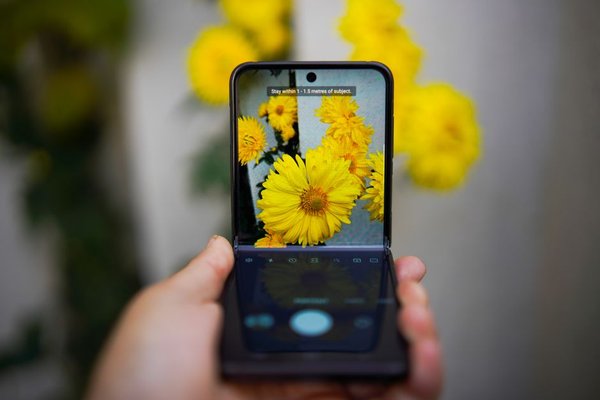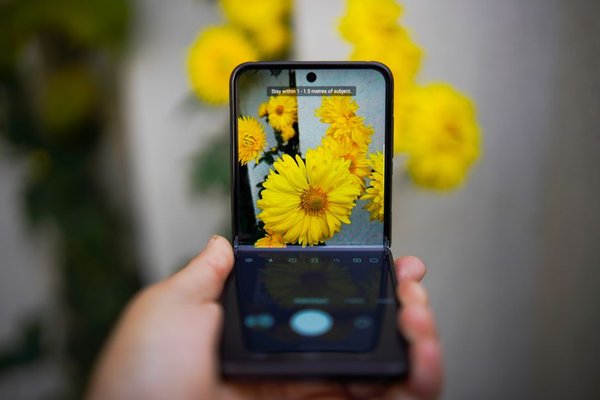
Foldable phones are no longer fragile prototypes, but require different care from conventional phones. The latest models have stronger hinges, tougher frames, and more mature flexible displays. Even so, the inner screen remains softer, repairs are expensive, and dust can still be a concern. So, are foldable phones worth it from a durability standpoint? For careful users who genuinely benefit from a larger screen or pocket-friendly flip design, the answer can be yes. For buyers who regularly drop phones, work around grit, or skip insurance, a traditional flagship is safer.
How Much Has Foldable Phone Durability Improved?
Modern foldables are more dependable than the first generation. Manufacturers reinforce hinges, use stronger metals, add protective seals, and place ultra-thin glass beneath flexible displays. Current premium models may also carry meaningful water and dust-resistance ratings. Google’s Pixel 10 Pro Fold, for example, is rated IP68, while several Samsung and Motorola foldables use IP48 protection.
An IP48 rating does not make a phone fully dustproof. It protects against solid objects larger than one millimetre, so very fine sand or workshop dust may still be risky. Water resistance also declines through wear and does not guarantee coverage for liquid damage. Foldable phone durability is now suitable for normal commuting, office use, and travel, but the category has not removed every mechanical compromise.
The Hinge Is Usually Less Worrying Than Expected
Reputable foldables are engineered for years of repeated opening and closing. Some manufacturers describe current hinges as capable of handling a decade of typical folding, while other laboratory claims run into hundreds of thousands of cycles. Even 200,000 folds would equal more than 100 openings per day for roughly five years.
Laboratory figures do not promise identical real-world results. Test machines fold devices without pocket lint, grit, twisting, or drops. Contamination and impact may matter more than the raw hinge count. Grinding noises, uneven resistance, or a phone that no longer opens flat deserve inspection.
The Inner Screen Remains the Main Trade-Off
A foldable display bends because its upper layers are thinner and softer than standard phone glass. Ultra-thin glass adds structure, but the surface normally includes flexible polymers and a factory-fitted protector. It handles ordinary tapping, yet remains more vulnerable to fingernail pressure, sharp objects, debris, and impacts along the crease.
Foldable screen lifespan therefore depends heavily on habits. Do not close the phone with coins, keys, cards, or crumbs between the halves. Avoid pressing hard on the crease, and never apply a generic glass protector to the inner display. If the factory film bubbles, lifts, or cracks, arrange replacement through the manufacturer or an authorised repair provider.
Consider two owners. One unfolds a book-style phone at a desk for reading and split-screen work. The other uses it around cement dust, keeps it beside tools, and answers calls with dirty gloves. The phones may have the same hinge rating, but the ownership environment creates a very different durability risk.
Drops, Water, and Dust
Drop protection
Foldables have multiple screens and a hinge edge that many slim cases leave exposed. An awkward fall may affect hinge alignment or the inner panel without producing an obvious crack. A fitted case with raised edges is sensible, especially one that protects the hinge.
Water resistance
Many current foldables can survive accidental splashes and controlled freshwater immersion within their rated limits. That does not make them suitable for pools, showers, saunas, or the sea. Salt, chlorine, soap, steam, and pressurised water create conditions standard ratings may not cover. Dry a wet device fully before charging it.
Dust exposure
Dust protection differs significantly by model. An IP68 foldable offers stronger fine-particle protection than an IP48 device, although no owner should deliberately expose a hinge to sand. Beach trips are particularly risky because fine grains can scratch the inner screen or enter small gaps. Compare this carefully when reading our guide to choosing the right foldable phone.
Foldable Phone Repair Cost Can Change the Answer
The biggest durability concern is often financial rather than mechanical. An out-of-warranty inner-screen repair can cost several hundred dollars. As a current US example, Samsung lists inner-screen repair pricing of about $449 for the Galaxy Z Fold7 and $249 for the Galaxy Z Flip7, while full screen-module replacement costs more. Prices vary by country, taxes, provider, model, and the parts required.
Before buying, check the standard repair estimate, accidental-damage deductible, and damaged-device trade-in value. Protection may be worthwhile when one repair would create financial strain, but some plans restrict claims or exclude cosmetic wear. Our smartphone insurance explained article can help compare the total cost.
Who Should Buy a Foldable?
A foldable is easier to justify when its form changes what you can do. Book-style models suit readers, travellers, multitaskers, and professionals who use two apps together. Flip models suit buyers who value compactness and hands-free tabletop photography. In those situations, accepting extra care and repair risk buys a meaningful benefit.
Choose a conventional phone when durability is the overriding priority, especially if you work in dusty environments, frequently drop devices, dislike cases, or plan to keep the phone beyond its coverage period. A standard flagship normally has fewer moving parts, a harder display surface, cheaper repairs, and more protective accessories. See our flagship phone buying guide for alternatives.
Questions to Ask Before Buying
Confirm the exact IP rating, local repair prices, warranty terms, protection-plan deductible, authorised service availability, and whether inner-protector replacement is included. Handle the phone in a shop, open it repeatedly, check the weight, notice the crease, and decide whether you will truly use the larger display. Durability compromises are hard to justify when the folding feature becomes a novelty after two weeks.
Frequently Asked Questions
How long should a foldable phone last?
A well-made foldable can last several years under normal use, and modern hinges are designed for large numbers of folds. Actual lifespan depends on drops, dust, screen care, battery ageing, and repair support rather than hinge cycles alone.
Does the crease get worse over time?
The crease may become slightly more visible with extended use, but gradual cosmetic change is not automatically a defect. Sudden lines, dead pixels, lifting film, cracking sounds, or touch problems require professional assessment.
Can you remove the inner screen protector?
Manufacturers generally advise against user removal. The protector is part of the display system, and incorrect removal or replacement may damage the panel or affect warranty coverage.
Are foldables more fragile than normal phones?
They remain more vulnerable in certain areas, particularly the soft inner display, hinge contamination, and repair cost. The gap has narrowed significantly, and some recent models now offer water and dust protection comparable to standard flagships.
Are Foldable Phones Worth It for Durability-Conscious Buyers?
Foldables are durable enough for mainstream use, but they are not as carefree as the toughest conventional phones. The hinge is unlikely to be the first problem for most owners; drops, debris, inner-screen damage, and expensive repairs deserve more attention. Buy one when the folding design will improve your routine, pair it with a good case and suitable coverage, and treat the inner display with reasonable care. When maximum ruggedness and low repair cost matter more than screen flexibility, stay with a traditional phone.